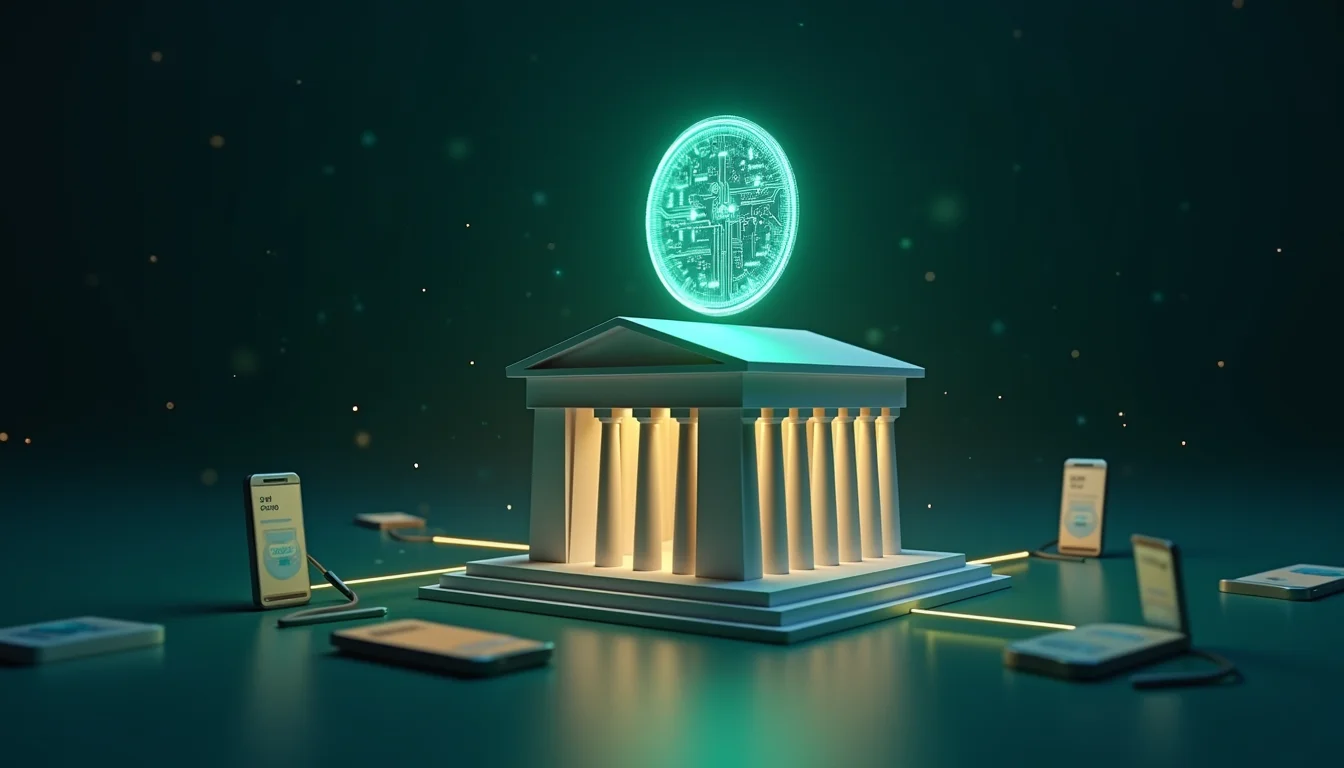

Blockchain became famous because of Bitcoin. However, the technology goes far beyond cryptocurrencies. It solves an old computing problem: how several parties that do not trust each other can agree on the same data record. In this guide, we explain what is blockchain, how it works under the hood and where it actually makes sense.
What is blockchain
A blockchain is a distributed ledger. Instead of living on a single server, the record is copied across many computers, called nodes. Data is grouped into blocks, and each block points to the previous one. Together they form a chain, hence the name.
Its key feature is practical immutability. Once a block is confirmed, changing it would require redoing every following block and convincing most of the network. In practice, that makes fraud unfeasible on large networks.
How blockchain works under the hood
1. Cryptographic hashes
A hash is a "fingerprint" of a set of data. Functions such as SHA-256 produce a fixed-length code. Moreover, even the smallest change to the data produces a completely different hash.
2. Chained blocks
Each block stores a set of transactions, a timestamp and the hash of the previous block. Therefore, if someone alters an old transaction, that block's hash changes and breaks the link with every block after it.
3. Digital signatures
Every participant has a key pair: one private and one public. Transactions are signed with the private key. Next, any node can verify the signature with the public key, without ever learning the secret.
4. Consensus mechanisms
Since there is no central authority, the network needs rules to decide which block joins the chain. The best-known mechanisms are:
- Proof of Work (PoW): miners compete to solve a computational puzzle. It is secure but energy-hungry. Bitcoin uses this model.
- Proof of Stake (PoS): validators lock up coins as collateral and are randomly selected to propose blocks. Ethereum adopted this model in 2022 and cut its energy use by more than 99%.
- Byzantine Fault Tolerant (BFT) consensus: common in private networks with a few known participants.
Types of blockchain
- Public: anyone can join and validate. Examples: Bitcoin and Ethereum.
- Private: controlled by a single organization, with restricted access.
- Permissioned or consortium: several companies share governance. Example: networks built on Hyperledger Fabric.
Smart contracts
Smart contracts are programs that run on the blockchain. They execute rules automatically when conditions are met. For example, releasing a payment as soon as a delivery is confirmed.
However, code published on a blockchain is hard to fix. That is why security audits are essential before any launch.
Real-world applications beyond cryptocurrencies
- Traceability: tracking the origin of food, medicine and minerals across the supply chain.
- Payments and digital currencies: several central banks are piloting digital currencies built on distributed ledger technology.
- Certificates and diplomas: documents that can be verified without contacting the issuing institution.
- Asset tokenization: real estate, receivables and securities represented digitally.
When not to use blockchain
Blockchain is not the answer to everything. If a single company controls the data and everyone trusts it, a traditional database is faster, cheaper and simpler. The technology makes sense when there are multiple participants, little mutual trust and a need for auditability.
Frequently asked questions
Are blockchain and Bitcoin the same thing?
No. Bitcoin is a cryptocurrency that uses a blockchain. Blockchain is the record-keeping technology behind it and behind many other systems.
Can a blockchain be hacked?
The chain itself is highly resistant. Attacks usually target wallets, exchanges and smart contracts with programming flaws.
Conclusion
Understanding what blockchain is helps separate the technology's real potential from the hype. It combines hashes, digital signatures and consensus to create trustworthy records between independent parties. If your company is evaluating a blockchain or smart contract project, WDS Developer can help validate the idea and build the solution.